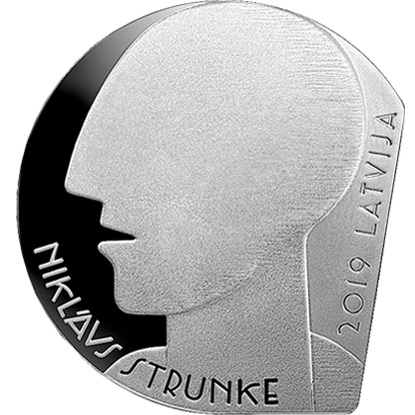
Niklāvs Strunke (1894–1966), Latvian painter, graphic artist and stage designer, was born in Gostynin in Poland and passed away in Rome, also far from Latvia. Since 1903, he and his brother spent their childhood on the farm "Palmēni" in Valmiera in the care of the sister of their father who served in the army of the tsarist Russia (the essays about art, written later in his life, were signed with the pen-name Palmēnu Klāvs). After finishing the Progymnasium of E. Liepiņš, Strunke continued his studies at the School of the Imperial Society for the Encouragement of the Arts in St. Petersburg and the Art Studio of Mikhail Bernstein where he drew inspiration from Russian modernists and evolved as a painter. The soon-to-be artist also refined his skills in other art studios such as the workshop of Jūlijs Madernieks (1870–1955) and that of Vasily Mate (1856–1917), graphic artist of the Academy of Arts in St. Petersburg, mastering etching and linocut techniques. As he lost his father and brother in World War I, Niklāvs Strunke volunteered to join the Cavalry Reconnaissance Unit of the 6th Tukums Latvian Riflemen Regiment where he met Jāzeps Grosvalds (1891–1920), one of the pioneers in Latvian modernism.
Having participated in exhibitions since 1914, Niklāvs Strunke had firmly established himself as one of the most original Latvian modernists by the time Latvia declared its independence. In the mid-1920s, Niklāvs Strunke introduced cubism in his paintings as well as his graphic designs of books and stage designs, featuring, in varying proportions, constructive geometric and illusory painting techniques. This was the time of high creativity and experimentation as the elements of cubism were increasingly influenced by constructivism, futurism and suprematism as well as Art Deco, 13th–15th century Italian paintings, Eastern miniature paintings and Latvian ethnographic heritage.
Niklāvs Strunke perfected his signature style in Germany and Italy. He participated at the Great Berlin Art Exhibition already in 1923 and held a solo exhibition in Rome in 1924. During his stay in the European metropolises, Niklāvs Strunke became involved in the local art life and established contacts with avant-garde artists. In his 1924 Paris manifesto "Le futurisme mondial" (Worldwide Futurism), Filippo Tommaso Marinetti, founder of the Futurist movement, counted Niklāvs Strunke among the broad international community of European avant-gardists. By the end of the 1920s, the artist's signature style changed as he turned to conservatism. As a recognition for his work, Niklāvs Strunke was awarded the Order of Three Stars (Fourth Class) in 1933. At the end of World War II Niklāvs Strunke sought refuge in Sweden; works dedicated to the theme of exile were created in Stockholm and Italy.
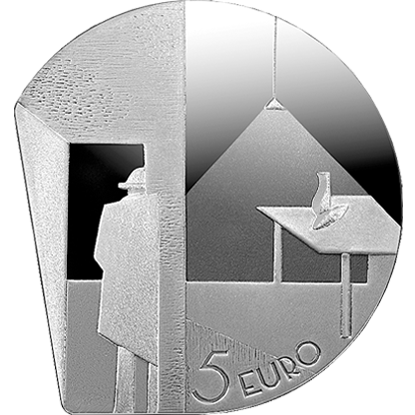
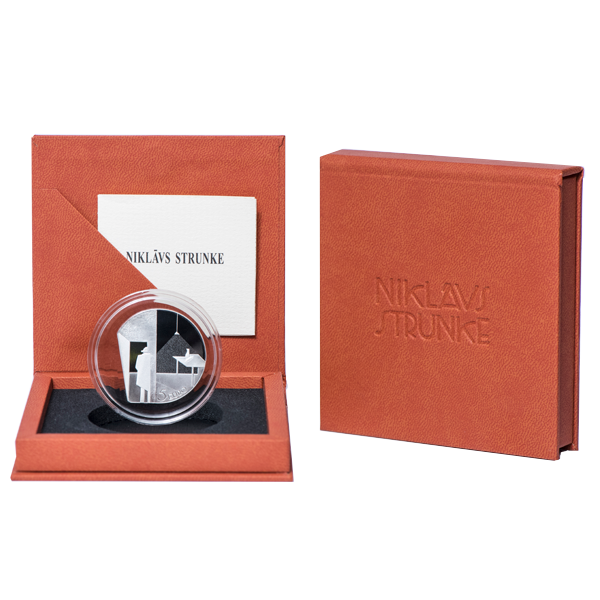
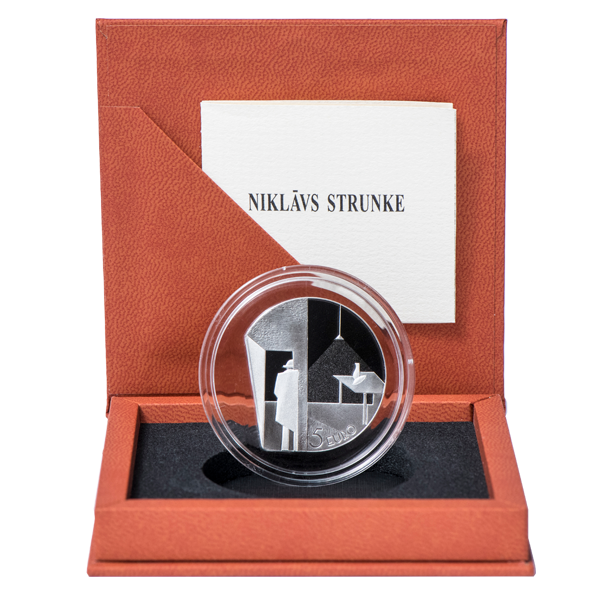
As a graphic designer of books, Niklāvs Strunke created hundreds of book covers and dozens of illustrated publications. He also created stage designs for several theatres and the Latvian National Opera, sketches of stained glass and porcelain artwork, poster and bookplate art as well as exhibition set-ups. Above all, however, he was a painter. Paintings of landscapes, portraits and still lifes reflect the artist's travels, agile temperament and his romantic outlook on life, also featuring dolls and ethnographic objects from his own collection. One of the most outstanding works of Niklāvs Strunke, the painting "Man Entering a Room" (1927), is included in the Latvian Cultural Canon and has been featured on the reverse of the collector coin dedicated to the creative legacy of Niklāvs Strunke.